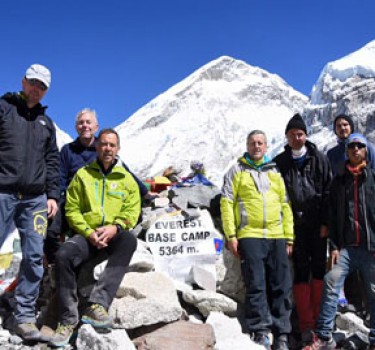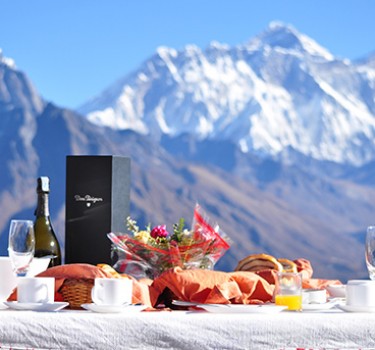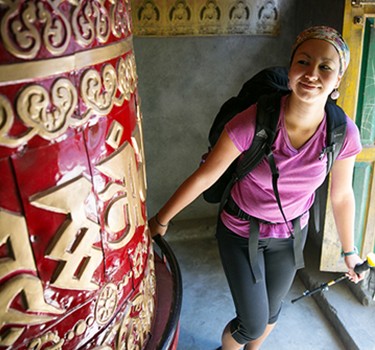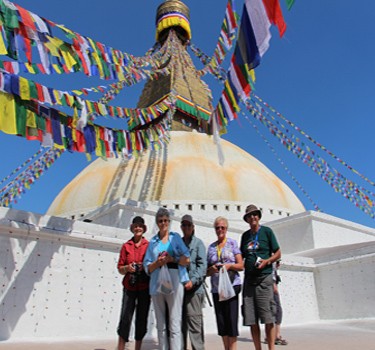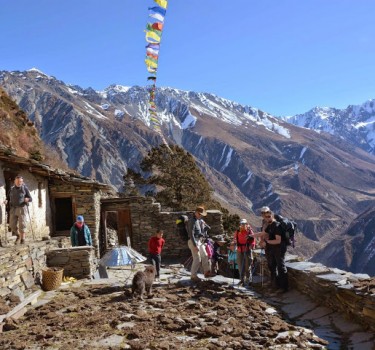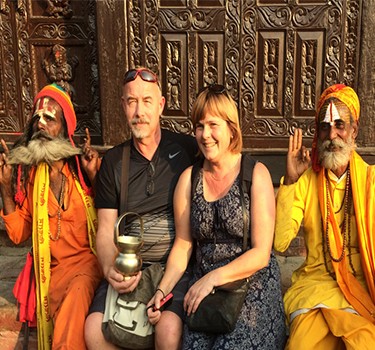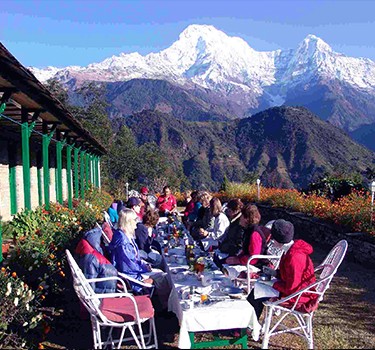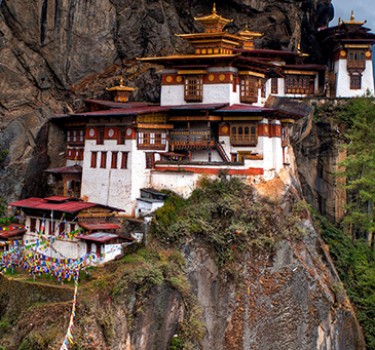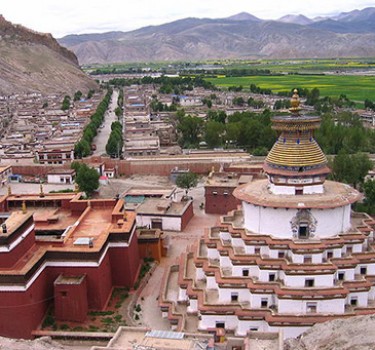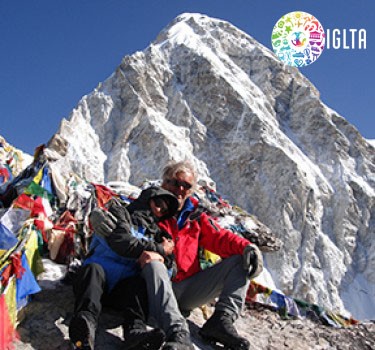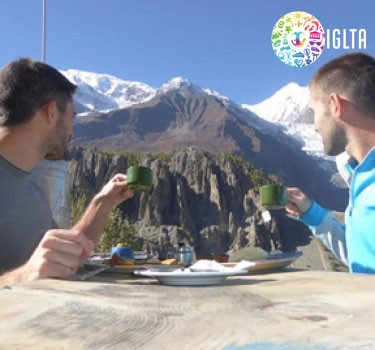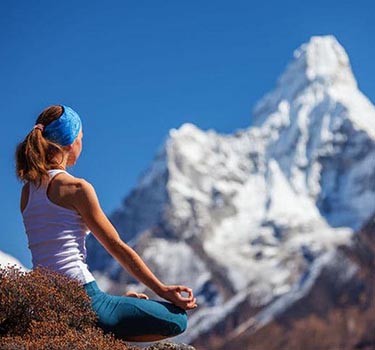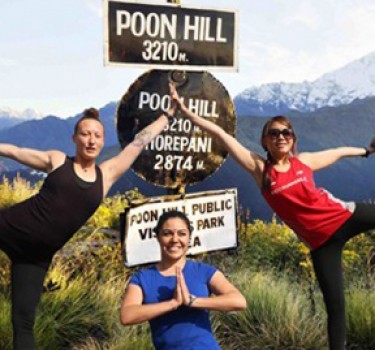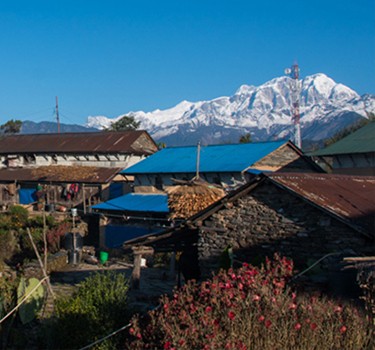




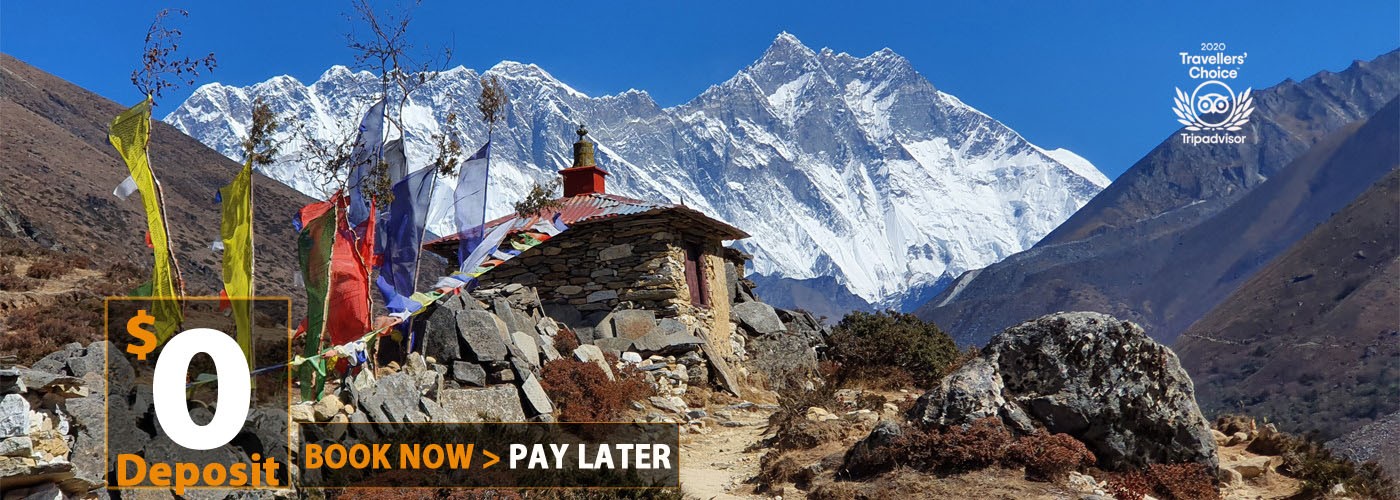
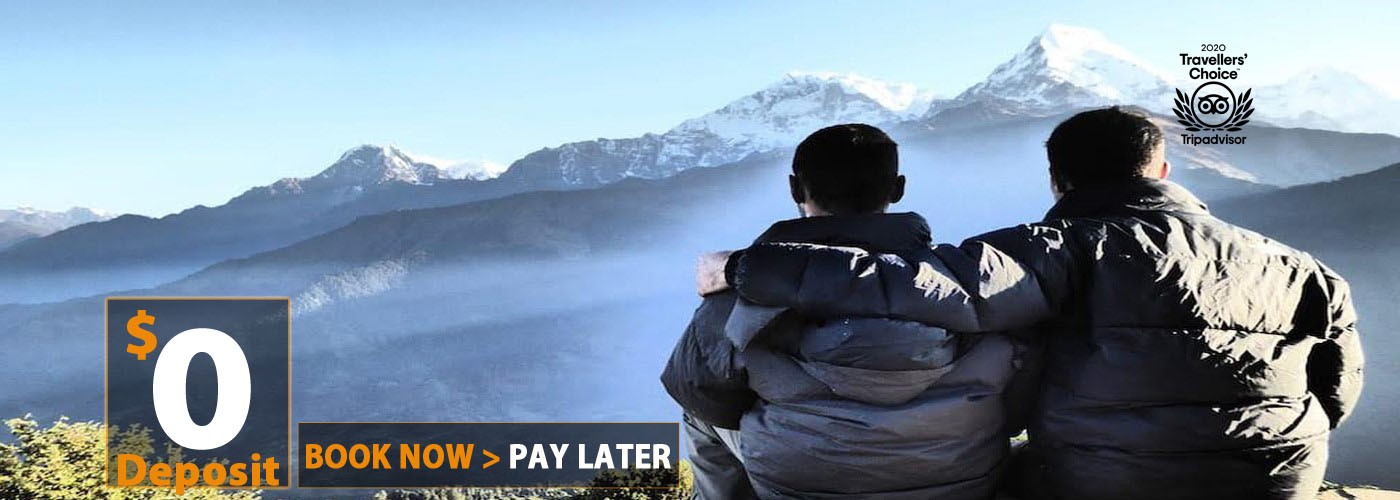



The Nepal Himalaya has always been known as the abode of the Gods. Many of the primordial history, religion, culture and tradition as well as legends and myths emanate from the awesome Himalaya. The Nepal Himalaya harbors many holy Temple and Shrines, Monasteries and sacred lakes in the wilderness and remote parts of the region. These sites are frequently visited by pilgrims. It is a land of piety and stillness. The Himalayas is the youngest and highest mountain chain on earth. A full third of its stretches - the formidable Great Himalayan Range of 800 km. Lies within the Nepal Himalaya. It has convergence of 1310 magnificent peaks of 6000 meters, including 8 of the worlds highest 14 peaks of 8000 meters.
Nestling in the rain shadows of these unique vistas of soaring summits unravel a profusion of lofty foothills, the home of the many Nepalese who delight in warm hospitality and friendship. These verdant terraced hill meander down to lush green valleys with turbulent rivers and to the tropical lowland and jungles teeming with countless wildlife. In this immensely diverse and undulating topography, varied climate and mix of people Nepal combines to produce a magical attraction for outsiders. Many foreign visitors come to trek one or more beautiful trekking regions.
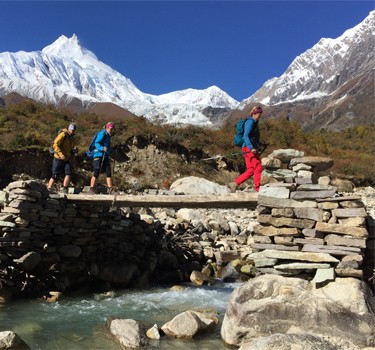
To trek, one does not have to be bizarre, neither a mountaineer nor an athlete. Anyone with a pair of strong legs and the spirit for adventure to explore the exotic will enjoy the thrills of trekking in the hills of Nepal. Walking in the interior of the country follows ancient foot trails which meander through the scenic river banks, intricately terraced fields and the forested ridges connecting picturesque hamlets and mountain villages. These highly developed and well defined trails have been used for centuries and are the hive of activities to come in contact with the locals.
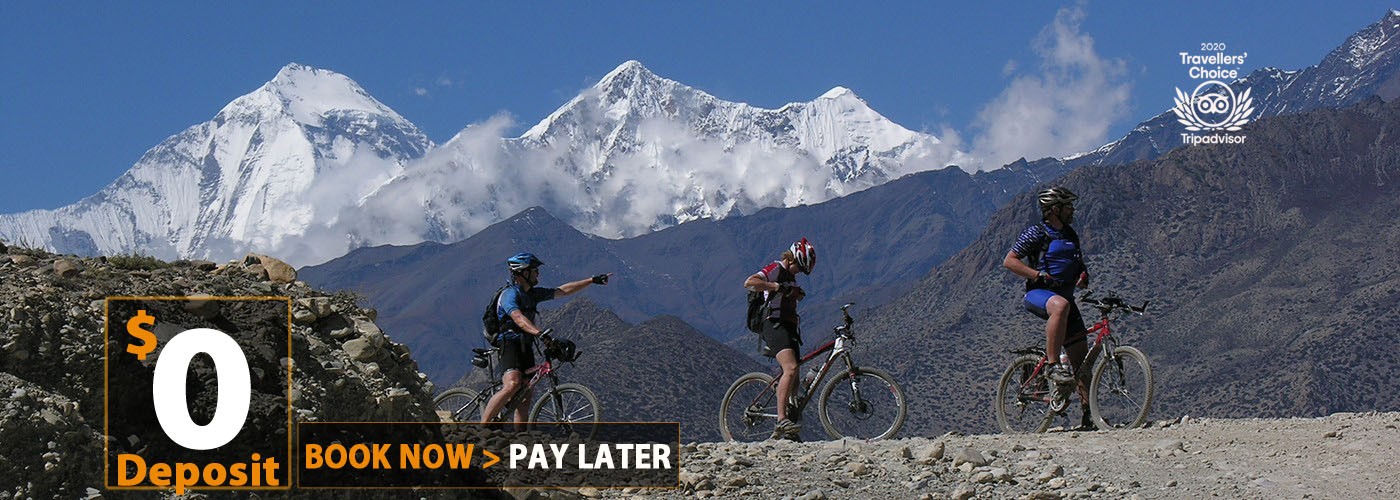
For visitors on extended holidays and with less restraint, there is an even more varied spectrum of adventure - be it rafting on the sparkling rivers, safaris in the jungles, trekking to explore deeper into the alpine valley with perpetual snow and glistering glaciers. The more intrepid traveler may venture further up to scale any of the 18 minor trekking peaks.
Introduction Nepal Background: In 1951, the Nepalese monarch ended the century-old system of rule by hereditary premiers and instituted a cabinet system of government. Reforms in 1990 established a multiparty democracy within the framework of a constitutional monarchy. An insurgency led by Maoist extremists broke out in 1996. The ensuing nine-year civil war between insurgents and government forces witnessed the dissolution of the cabinet and parliament and assumption of absolute power by the king. Several weeks of mass protests in April 2006 were followed by several months of peace negotiations between the Maoists and government officials, and culminated in a November 2006 peace accord and the promulgation of an interim constitution. The newly formed interim parliament declared Nepal a democratic federal republic at its first meeting in May 2008, the king vacated the throne in mid-June 2008, and parliament elected the country's first president the following month. Geography Nepal Location: Southern Asia, between China and India Geographic Coordinates: 28 00 N, 84 00 E Area Total: 147,181 sq km Land: 143,181 sq km Water: 4,000 sq km Border Countries: China 1,236 km, India 1,690 km Coastline: 0 km (landlocked) Climate: varies from cool summers and severe winters in north to subtropical summers and mild winters in south Terrain: Tarai or flat river plain of the Ganges in south, central hill region, rugged Himalayas in north Elevation extremes: Lowest point: Kanchan Kalan 70 m Highest point: Mount Everest 8,850 m Natural resources: quartz, water, timber, hydropower, scenic beauty, small deposits of lignite, copper, cobalt, iron ore Natural hazards: severe thunderstorms, flooding, landslides, drought, and famine depending on the timing, intensity, and duration of the summer monsoons Environment - current issues: deforestation (overuse of wood for fuel and lack of alternatives); contaminated water (with human and animal wastes, agricultural runoff, and industrial effluents); wildlife conservation; vehicular emissions Geography - note: landlocked; strategic location between China and India; contains eight of world's 10 highest peaks, including Mount Everest and Kanchenjunga - the world's tallest and third tallest - on the borders with China and India respectively Population: 29,519,114 (July 2008 est.)
Age structure: 0-14 years: 38% (male 5,792,042/female 5,427,370) 15-64 years: 58.2% (male 8,832,488/female 8,345,724) 65 years and over: 3.8% (male 542,192/female 579,298) (2008 est.)
Median age: Total: 20.7 years Male: 20.5 years Female: 20.8 years (2008 est.) Population growth rate: 2.095% (2008 est.) Birth rate: 29.92 births/1,000 population (2008 est.) Death rate: 8.97 deaths/1,000 population (2008 est.)
Ethnic groups: Chhettri 15.5%, Brahman-Hill 12.5%, Magar 7%, Tharu 6.6%, Tamang 5.5%, Newar 5.4%, Muslim 4.2%, Kami 3.9%, Yadav 3.9%, other 32.7%, unspecified 2.8% (2001 census)
Religions: Hindu 80.6%, Buddhist 10.7%, Muslim 4.2%, Kirant 3.6%, other 0.9% (2001 census)
Languages: Nepali 47.8%, Maithali 12.1%, Bhojpuri 7.4%, Tharu (Dagaura/Rana) 5.8%, Tamang 5.1%, Newar 3.6%, Magar 3.3%, Awadhi 2.4%, other 10%, unspecified 2.5% (2001 census)
Literacy definition: age 15 and over can read and write
COUNTRY Country Name: Nepal Capital Name: Kathmandu Conventional Long Form: Federal Democratic Republic of Nepal Conventional Short Form: Nepal Local Long Form: Sanghiya Loktantrik Ganatantra Nepal Local Short Form: Nepal Government type: federal democratic republic Geographic coordinates: 27 43 N, 85 19 E Time Difference: UTC+5.75 (10.75 hours ahead of Washington, DC during Standard Time) Administrative Divisions: 14 zones (anchal, singular and plural); Bagmati, Bheri, Dhawalagiri, Gandaki, Janakpur, Karnali, Kosi, Lumbini, Mahakali, Mechi, Narayani, Rapti, Sagarmatha, Seti Independence: 1768 (unified by Prithvi Narayan SHAH) National holiday: Constitution Day (9 November) as national holidays Constitution: 9 November 1990; note - a new interim constitution was promulgated in January 2007; the November 2006 peace agreement calls for the election of a Constituent Assembly to draft a new permanent constitution Legal system: based on Hindu legal concepts and English common law; has not accepted compulsory ICJ jurisdiction Suffrage: 18 years of age; universal
Executive branch: Chief of state: President Ram Baran YADAV (as of 23 July 2008); Vice President: Paramananda JHA (as of 23 July 2008) Head of government: Prime Minister Pushpa Kamal DAHAL (as of 18 August 2008); Deputy Prime Minister: Bamdev GAUTAM Cabinet: Cabinet formed in August 2008 by a majority coalition made up of the Communist Party Nepal (Marxist), Communist Party Nepal-United Marxist-Leninist, and Mahdesi Jana Adhikar Forum Flag description: Red with a blue border around the unique shape of two overlapping right triangles; the smaller, upper triangle bears a white stylized moon and the larger, lower triangle bears a white 12-pointed sun
Economy - overview: Nepal is among the poorest and least developed countries in the world with almost one-third of its population living below the poverty line. Agriculture is the mainstay of the economy, providing a livelihood for three-fourths of the population and accounting for 38% of GDP. Industrial activity mainly involves the processing of agricultural produce including jute, sugarcane, tobacco, and grain. Security concerns relating to the Maoist conflict have led to a decrease in tourism, a key source of foreign exchange. Nepal has considerable scope for exploiting its potential in hydropower and tourism, areas of recent foreign investment interest. Prospects for foreign trade or investment in other sectors will remain poor, however, because of the small size of the economy, its technological backwardness, its remoteness, its landlocked geographic location, its civil strife, and its susceptibility to natural disaster. Bumper crops, better security, improved transportation, and increased tourism pushed growth past 4% in 2008, after growth had hovered around 2.3% - the rate of population growth - for the previous three years. Agriculture - products: rice, corn, wheat, sugarcane, jute, root crops; milk, water buffalo meat Industries: tourism, carpets, textiles; small rice, jute, sugar, and oilseed mills; cigarettes, cement and brick production
Telephone system: General assessment: poor telephone and telegraph service; fair radiotelephone communication service and mobile-cellular telephone network domestic: NA International country code - 977; radiotelephone communications; microwave landline to India; satellite earth station - 1 Intelsat (Indian Ocean)
|